Eating with the Season: A Canadian Winter Food Guide
By Sophie Clarke · · 7 min read
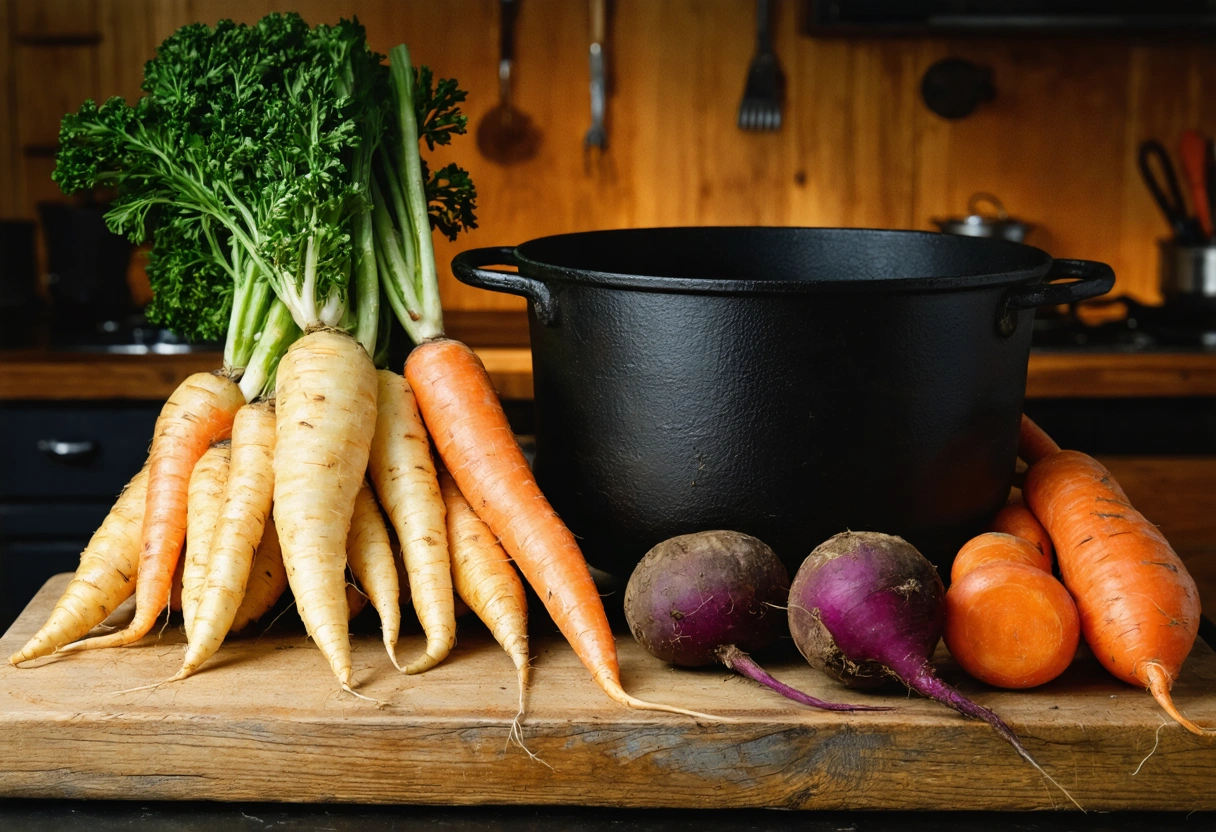
The winter pantry is not empty. It is different — and learning to work with it changes how you eat through the cold months.
Seasonal eating is most easily practised in summer, when the argument makes itself: tomatoes from the garden in August taste nothing like their January counterparts, and the visual abundance of the farmers' market in July is straightforwardly persuasive. Winter seasonal eating requires a different kind of persuasion — an understanding that the season's abundance looks different, not that it doesn't exist.
In Canada, where winter spans months rather than weeks, developing a relationship with the winter food supply — preserved, stored, and in many regions available fresh — is a genuine quality-of-life improvement for anyone who cooks regularly.
1. Root Vegetables: The Foundation of Winter Cooking
The root vegetable category — carrots, parsnips, turnips, celeriac, beets, rutabaga, sweet potatoes, potatoes — forms the backbone of Canadian winter cooking for good reasons. These vegetables store well under cool, dry conditions; many of them improve with a period of cold storage, as starches convert to sugars. Parsnips are sweeter after a frost; carrots stored through autumn develop more concentrated flavour.
The most underrated root vegetable in the Canadian winter kitchen is probably celeriac — the root of the celery plant, with a flavour that combines celery's aromatic quality with the earthiness of a potato. It roasts well, purées silkily, and makes a bracing remoulade when raw. It is available at most grocery stores and many farmers' markets through winter.
Root vegetables benefit from heat: high-heat roasting, long braises, and extended soups all suit the density of the ingredient and produce results that summer cooking cannot replicate.
2. Alliums: Onions, Leeks, and Garlic
The allium family — onions, leeks, garlic, shallots — is available year-round but is at its best in fall and winter, when the season's crop has been cured and stored. Well-cured onions and garlic hold for months without deterioration and form the aromatic foundation of virtually all winter cooking traditions.
Leeks, which are less commonly grown in Canadian home gardens than their value deserves, are available in most grocery stores through winter. Their milder flavour and silky texture when slowly cooked make them particularly versatile: braised slowly in butter, they become almost a different ingredient from the raw state.
Caramelised onions — a long, slow process that converts the onion's water into concentrated sweetness — are a winter kitchen asset worth making in quantity and refrigerating for use in soups, pastas, eggs, and cheese dishes.
3. Preserved Fish: A Canadian Tradition Worth Reviving
The Canadian tradition of preserved fish — salt cod from the Atlantic provinces, smoked salmon from the Pacific coast, pickled herring from both — connects winter eating to the food-preservation practices of communities that required the nutrient density of fish protein through months when fresh ingredients were unavailable.
Salt cod requires advance planning: it needs soaking and rehydration before use, typically over 24 hours with several water changes. The result is a protein of distinctive flavour and texture, completely unlike fresh cod, that forms the base of brandade (a Provençal purée), baccalà (the Italian and Portuguese versions of the same ingredient), and various Atlantic Canadian preparations that have largely fallen out of mainstream use but deserve reconsideration.
Smoked fish — Pacific salmon, Arctic char, trout, mackerel — is more immediately accessible. Many Canadian fish smokers now distribute nationally through specialty food retailers and online, and the quality of Canadian smoked fish is exceptional by any international standard.
4. Grains and Legumes: The Winter Protein
Dried grains and legumes — lentils, dried beans of every variety, split peas, whole grains like barley, rye, and farro — are the original storage food, available indefinitely at room temperature and constituting a complete winter pantry in themselves.
The Canadian dried pea and lentil industry is among the largest in the world; the Prairie provinces produce a substantial share of global lentil and field pea supply. Using these ingredients — which are produced locally and available at very modest cost — is an expression of the kind of regional food self-sufficiency that supports both local agriculture and household resilience.
Split pea soup is the obvious starting point — the Quebec version, made with yellow split peas and salt pork, is one of the great Canadian comfort dishes — but lentils are more versatile: they cook quickly, absorb flavour readily, and work in dishes ranging from dal to French lentil salads to hearty stews.
5. Fermented Foods: Winter's Probiotic Layer
Fermented foods — sauerkraut, kimchi, pickles, kefir, yogurt, miso — are natural winter accompaniments. Historically, fermentation served as a primary preservation method for vegetables through winter months. Nutritionally, they contribute probiotic bacteria that may support gut health in ways that are currently an active area of research (though specific health claims require qualified language and professional consultation).
From a practical kitchen standpoint, fermented foods add acidity, umami depth, and textural contrast to the heavy, slow-cooked foods that dominate winter menus. A spoonful of sauerkraut on a braised pork dish, or a bowl of kimchi alongside roasted root vegetables and rice, transforms the meal in ways that add complexity without adding work.
Making sauerkraut at home requires nothing more than cabbage, salt, a jar, and several days of patience. The fermentation happens without intervention; the result is a product genuinely different from the pasteurised commercial version.
6. Canadian Winter Produce: What Is Actually Available
Contrary to the assumption that winter means no local produce, several Canadian-grown items are available through winter months in most regions:
- Greenhouse tomatoes and peppers: BC's Fraser Valley is home to a substantial greenhouse industry producing year-round vegetables.
- Mushrooms: Cultivated mushrooms — oyster, shiitake, cremini — are produced year-round in facilities across Canada.
- Microgreens and sprouts: Urban farms in most major cities now produce fresh microgreens year-round.
- Apples: Well-selected storage varieties hold their quality into February and sometimes March in proper cold storage.
The farmers' market does not disappear in winter — it changes. In most Canadian cities, year-round markets offer preserved products, storage vegetables, greenhouse produce, eggs, meat, and dairy that reflect the season's actual offerings.
EstateVodka covers food, culture, and everyday life across Canada.
Content on EstateVodka may include sponsored material. See our Disclaimer and Privacy Policy. This content is for general informational purposes only and does not constitute professional advice.